
Retail customers expect instant answers and personalized experiences everywhere, online, in-store, and at any hour. Meeting these demands without dramatically scaling your support team is the challenge every retailer faces today.
AI-powered chatbots are solving this problem at scale. Brands report up to increases in sales and reductions in operational costs.
This guide walks you through the most impactful chatbot use cases in retail. We will mention some real-world examples and practical implementation steps using Typebot.
The growing impact of AI on retail communication
The merchant-customer relationship is shifting. The focus is no longer only on having a digital storefront but on how that storefront communicates and responds.
Global consumer spending via virtual assistants is projected to rise sharply, from $2.8 billion in 2019 to $142 billion.
Nearly 40% of internet users now prefer interacting with a bot over a human representative. These figures reflect real behavior. Automated, conversational interfaces are becoming routine in commerce.
Enhancing hyper-personalization through customer data analysis
AI chatbots transform interactions into personalized shopping journeys by analyzing purchase history and browsing behavior.
- 76% of consumers prefer brands that offer personalization.
- 78% are more likely to recommend and repurchase from those brands.
- 71% of Gen Z actively seeks products using bots.
Bots collect and analyze customer data in real time. This enables them to recommend relevant products, address concerns early, and encourage purchase completion.
The future of agentic commerce and autonomous retail tasks
Agentic AI shifts chatbots from passive responders to autonomous workers that act and make decisions.
These agents can handle entire tasks without human intervention, such as:
- Detecting delivery delays
- Contacting logistics partners
- Issuing updates to customers
- Checking stock across locations
- Arranging delivery
- Completing transactions
As global retail sales increase this level of autonomy will become essential for efficient operations. Bots are moving beyond communication tools to become operational employees who manage the full purchase lifecycle.
Intelligent product recommendations and guided shopping
The operational challenge: overcoming choice paralysis
Offering too many options often prevents shoppers from making any decision. Retailers face a curation problem, not an inventory issue. Shoppers want a small selection of items that fit their needs, not an entire catalog.
A conversational personal shopper mimics an in-store expert by asking focused questions. It leverages customer preferences and purchase history to present a short, relevant product list. This approach reduces friction and shortens the purchase path, boosting conversion rates.
Real-life example: La Mer's digital consultation and quiz bots
La Mer transformed its in-store consultation into an interactive quiz recommending regimens based on user responses.
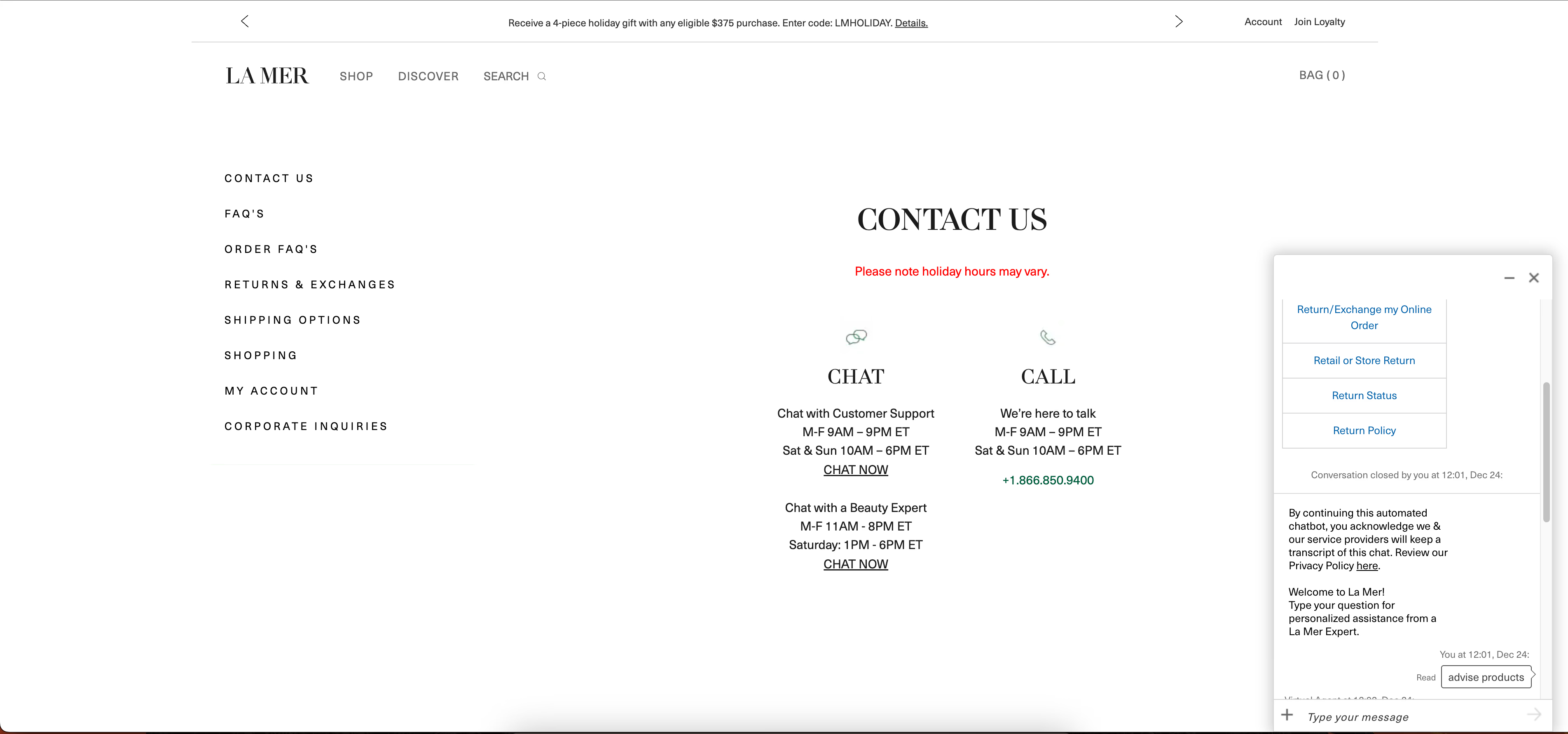
The bot answers product questions naturally and provides ingredient details, similar to a counter consultant. It handled over 3,350 trained utterances, proving users engage in detailed conversations for high-value items.
During the holidays, Tom Ford Beauty used a gifting concierge with visuals and quizzes to guide shoppers to the right gift.
This approach generated over 2,000 product clicks in a month. These examples show that structured guidance increases engagement and conversion when tailored to the product and audience.
Solving it with Typebot: building a visual product quiz
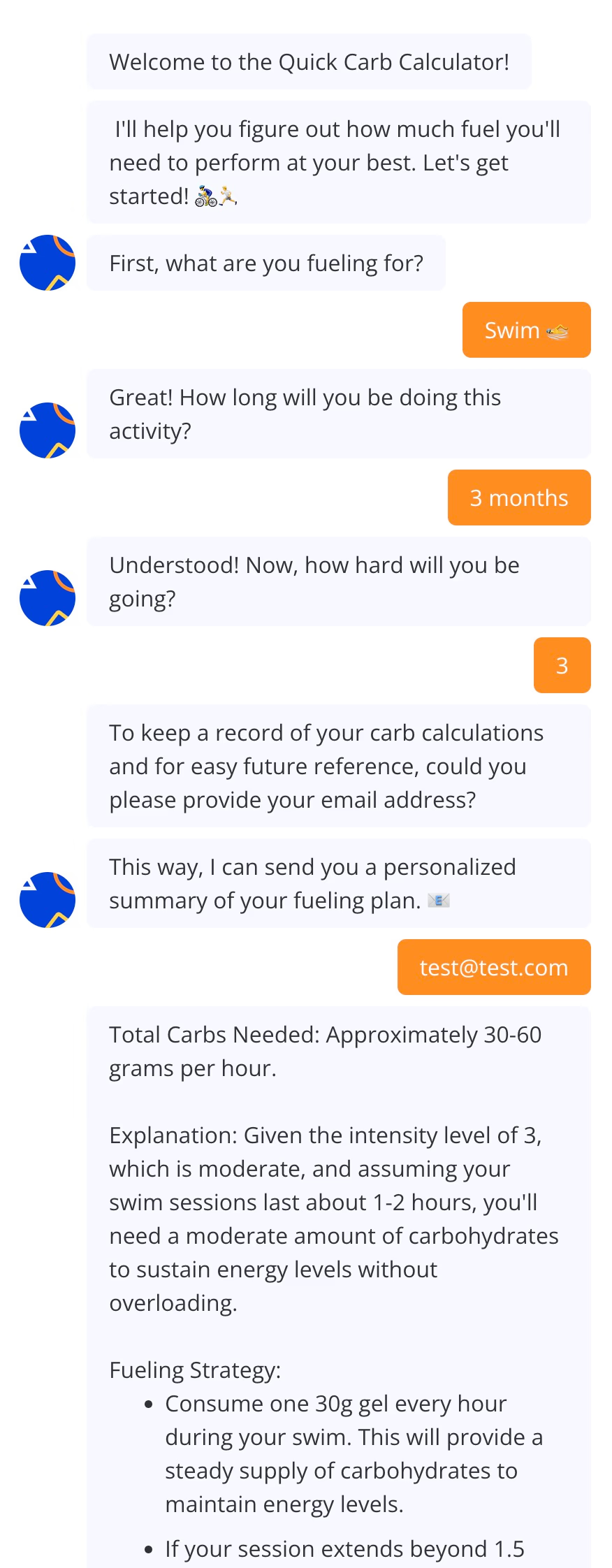
You can create a high-converting recommendation flow without coding using Typebot's visual building blocks and templates.
Start with templates and variables like:
- "Product Recommendation" or "Skin Typology" templates
- Save user answers in variables (e.g., {{SkinType}} or {{Budget}}) so the bot can recall and use preferences during the session.
Use logic and branching to direct the flow based on variables. For example:
- If {{SkinType}} = 'Oily', route to the 'Gel Moisturizer' path.
- Combine AND/OR operators for precise recommendation trees.
Integrate AI-powered dynamic suggestions with an AI block. This generates human-like, persuasive recommendations from collected variables without hard-coding every response. Train the chatbot on your catalog or dataset to ensure suggestions remain accurate and relevant.
Enhance visual engagement by using carousels, images, and avatars using an avatar maker to reduce text fatigue and align with your brand style.
Combining conditional logic, personal variables, and rich media turns a product quiz into a guided brand experience.
Instant FAQ resolution and 24/7 customer support
When customers have questions at 2:00 AM, they compare your site's ease of use to competitors' availability.
Data shows 90% of Americans consider customer service when choosing a business, and 51% expect access around the clock. Retail chatbots close this gap by providing immediate answers outside normal business hours.
The operational challenge: reducing support ticket volume
Repetitive inquiries like returns, store hours, and shipping fill support queues. This prevents agents from addressing complex, high-value issues. Rule-based bots and AI automation handle predictable tasks, cutting ticket volume and operational costs significantly.
For example, Farm Superstores used a WhatsApp chatbot to manage repetitive queries. This resulted in a 60% reduction in operational costs.
Rule-based flows deliver instant, accurate replies for static details. Meanwhile, NLP-powered systems interpret intent for more complex requests. This approach lowers the cost per interaction and allows support to scale without adding more staff.
Real-life example: Walmart’s Ask Sam and automated help desks
Walmart’s Ask Sam is a voice assistant for in-store associates. It provides real-time, hands-free information such as product location and staff responsibility, streamlining floor operations.
Customer-facing bots automate questions about order tracking, returns, and shipping. This keeps buyers informed without waiting for email replies.
This example highlights the importance of integrating automated help desks with inventory and policy data. Removing uncertainty speeds up decisions and improves customer satisfaction.
Solving it with Typebot
Typebot offers a visual way to build reliable 24/7 support agents without heavy engineering effort.
Use blocks to create decision trees for common FAQs. Like refunds, payment issues, shipping information. For instance, a "Returns" button routes users to a specific return-policy flow. It delivers precise answers on static information like hours or sizing.
Typebot's Free plan allows 200 chats per month, ideal for prototyping support flows. Its Pro plan, priced at $89/month, supports up to 10,000 chats, enabling continuous, around-the-clock customer support.

Create, customize, and deploy your first Typebot today. No coding required.
No trial. Generous free plan.
Automated order tracking and logistics updates
"Where is my order?" (WISMO) is the most common customer support question. Manually answering these tracking inquiries uses agents' time that could be spent solving complex problems or improving sales.
Automating logistics updates creates a 24/7 self-service option that reduces costs and improves efficiency.
The operational challenge: answering "where is my order" calls
The main issues are volume and speed. During busy times, tracking questions flood support queues and delay responses for damaged or lost items. 82% of customers value quick responses, and long waits reduce satisfaction.
Human teams cannot scale quickly without raising costs. Automating logistics updates with real-time data from fulfillment systems creates a 24/7 self-service option. This reduces both costs and response times.
Solving it with Typebot
Building a tracking bot no longer requires heavy engineering. Typebot's HTTP Request block and variables manage data flow smoothly.
Start by capturing the user's intent and order ID. Ask for the Order ID or use Prefilled Variables. So, a link like your-site.com/chat?order_id=12345 sets the {{order_id}} automatically. This reduces friction and shows status immediately.
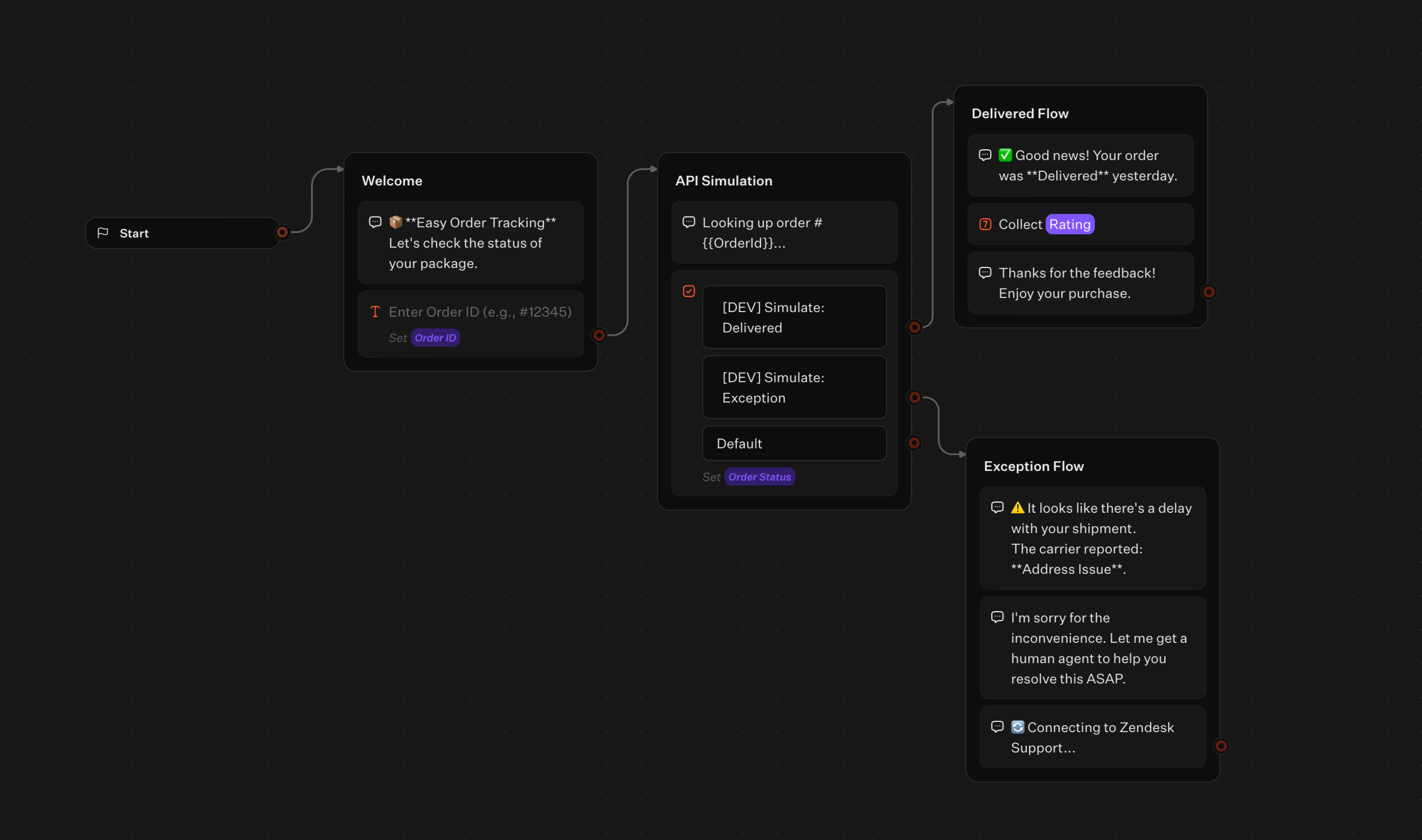
Next, retrieve and parse tracking data using the HTTP Request block to call your eCommerce or carrier API. Parse the response with inline expressions like {{=JSON.parse({{API Response}}).status}} to extract status, delivery estimates, or carrier info.
Then, route the conversation based on status with the Condition block:
- If status is "Delivered," start a "Rate your experience" flow.
- If status shows "Exception" or "Delayed," apologize. Explain the next steps, and route to a human agent with full context via tools like ZenDesk.
Keep messages concise, empathetic, and clear about next steps. The bot should escalate automatically when it detects exceptions or missing data.
This configuration automates most tracking queries while escalating complex issues with full context. This enables accurate updates without adding staff.
Proactive cart abandonment recovery and upselling
Abandoned carts represent missed revenue opportunities. Recover them with timely, relevant actions. Instead of losing customers at checkout, you can leverage data-driven conversations to:
- Address customer objections
- Offer strategic incentives
- Boost average order value
The operational challenge: recovering lost revenue at checkout
Traffic acquisition costs are high. Losing shoppers at checkout wastes that investment. Static checkout pages cannot respond to concerns about returns, shipping, or price in real time.
A proactive assistant at the point of purchase can answer customer questions, reduce friction, and present targeted offers. These actions encourage purchases, recover lost sales, and maximize revenue from existing traffic.
Real-life example: mobile chat and styling suggestions
Personalized, value-added interactions outperform generic follow-ups. For example:
- American Eagle's chatbot delivers fit and care advice, driving a 25% clickthrough rate and attracting thousands of new customers.
- Burberry's conversational concierge delivered real-time styling guidance and product pairings. This approach transformed single transactions into ongoing customer relationships.
These examples show how tailored conversations at checkout can drive engagement and increase sales.
Solving it with Typebot
You can design recovery flows visually and engage customers when they hesitate.
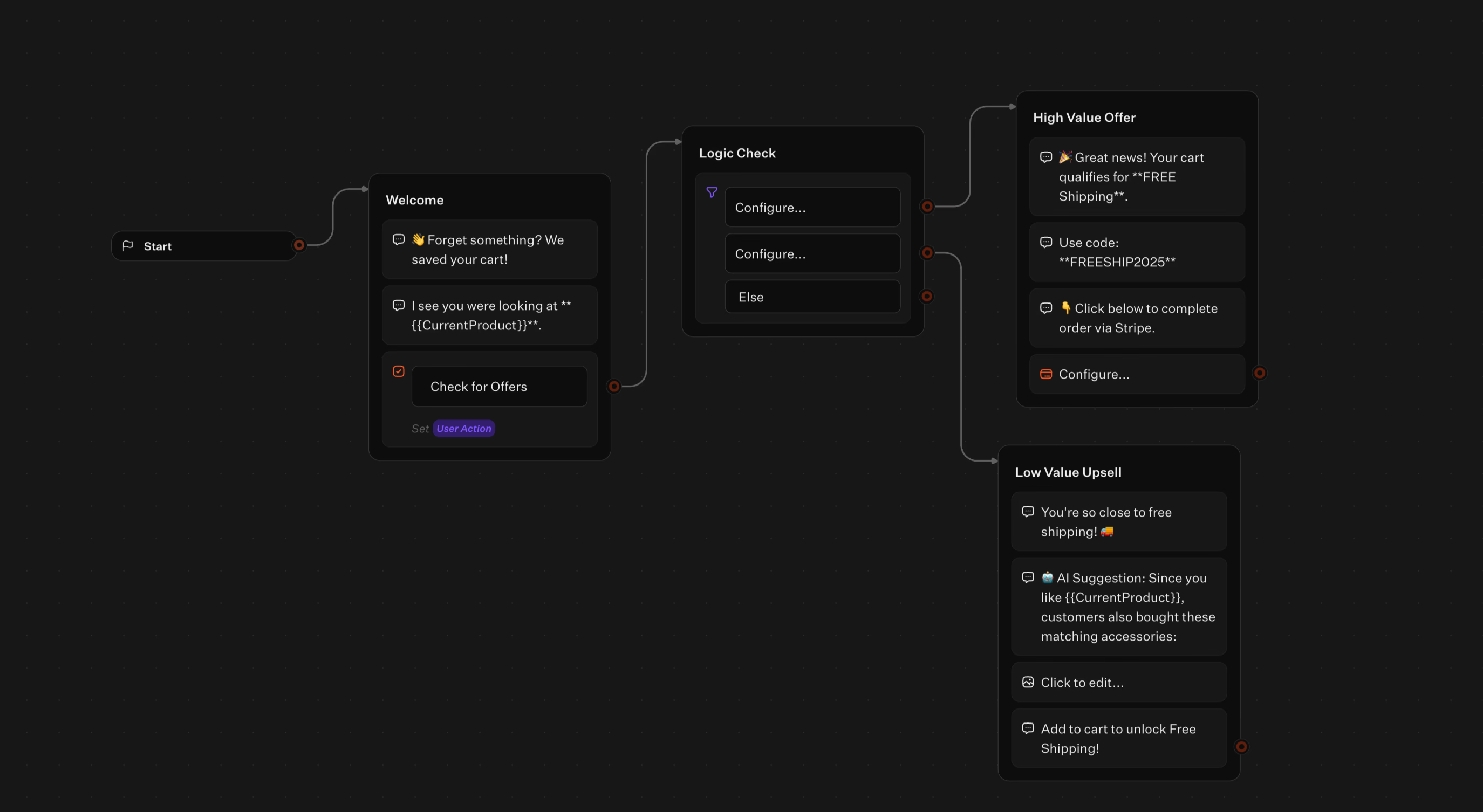
Trigger the engagement by using embedded options like a bottom-right Bubble or a Popup that appears based on user behavior. Include cart details or page context through hidden fields so the bot starts with relevant information.
Build the logic flow with Condition blocks that evaluate variables such as Cart Value. For instance:
- Path A (High Value): offer a small discount or free shipping to close the sale.
- Path B (Low Value): suggest an upsell to help the customer reach the free-shipping threshold.
Use AI-driven recommendations by sending cart context to OpenAI to create personalized suggestions. For example, if a user views a denim jacket, Typebot prompts OpenAI to recommend three matching accessories. Then displays these with "Add to Cart" buttons.
Integrate checkout inside the chat by adding payment options like Stripe. This reduces steps between purchase intent and completion.
Real-time triggers, conditional logic, contextual AI, and in-chat payments transform checkout into an active revenue generator. This approach lowers abandonment rates and raises average order value.
Enhance your chatbot's capabilities with advanced AI from OpenAI and Anthropic.
No trial. Generous free plan.
In-store and omnichannel engagement
Customers expect the same detailed information in-store as they get online. When digital and physical channels do not connect, sales decrease. A retail chatbot bridges that gap. It turns a store visit into an interactive, data-driven experience that enhances eCommerce.
The operational challenge: bridging the online-offline gap
Common in-store problems include out-of-stock items, hard-to-find merchandise, and limited associate availability. These issues cause missed sales when shoppers cannot get instant answers.
The operational goal is clear. A customer standing in Aisle 4 should access the same inventory and support available at home, without increasing staff.
Solving it with Typebot
You can create a "digital associate" using simple, low-cost tools. Start with the physical trigger:
- Place QR codes on shelf talkers, dressing-room mirrors, or receipts.
- Scanning opens a contextual Typebot flow instead of a generic page.
Next, use the platform:
- Publish the bot to WhatsApp, where customers already communicate.
- This lets them ask questions like "Do you have this in Medium?" or "Where's returns?" easily.
Finally, connect the logic and data:
- Capture product identifiers via Input blocks (SKU or name).
- Query inventory using Google Sheets or an HTTP Request integration.
- If the item is in stock, confirm aisle number and availability.
- If out of stock, offer to order online or check nearby stores via a Condition block.
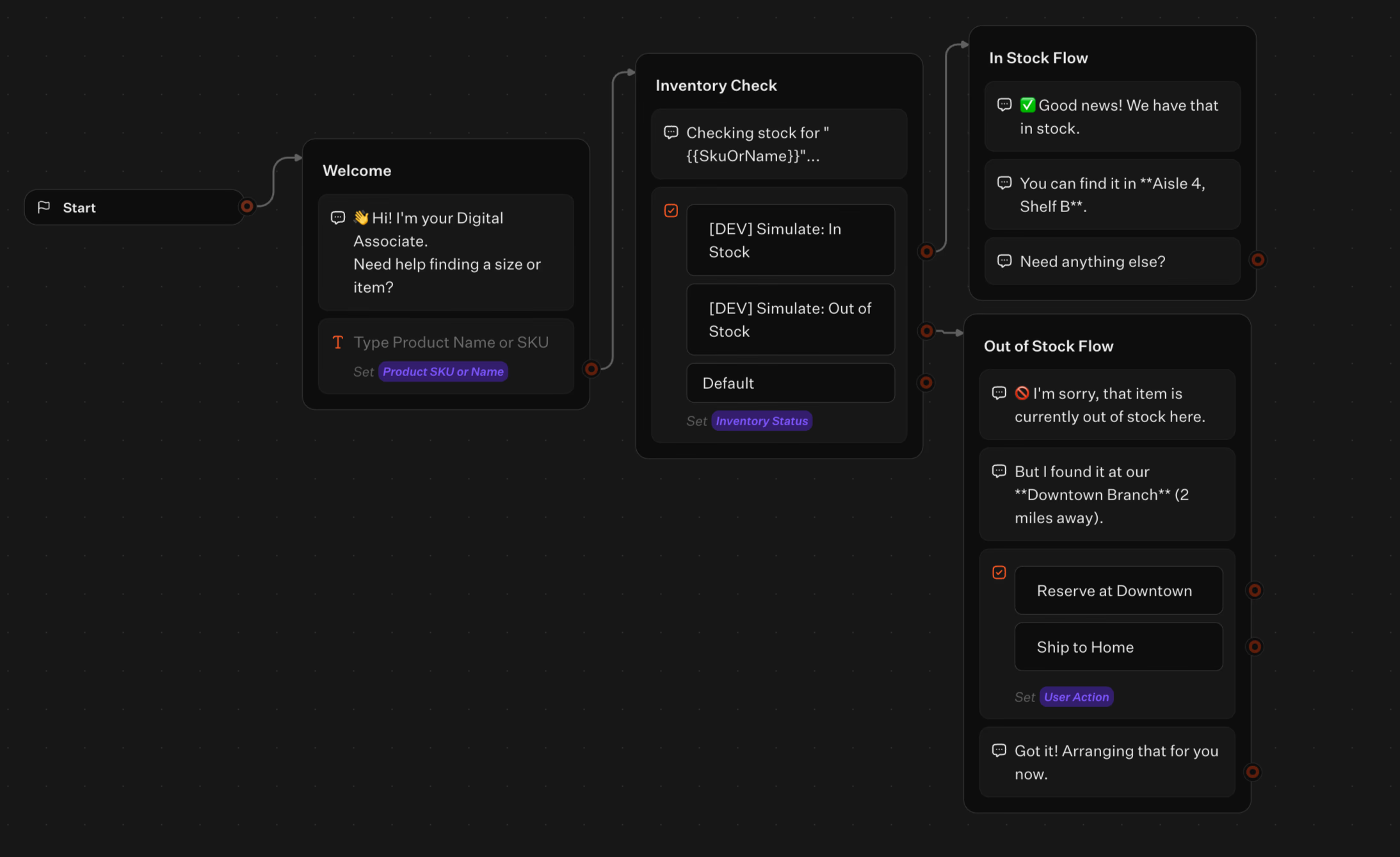
This setup turns passive browsing into guided visits. It delivers instant, context-aware answers to shoppers on the floor, increasing conversion rates.
Want to expand this WhatsApp strategy beyond inventory checks? Learn how to set up automated WhatsApp messages that keep customers engaged throughout their shopping journey.
Measuring success: key KPIs and ROI for retail chatbots
Tracking the right metrics turns a chatbot from a novelty into a revenue-driving tool. Focus on outcomes that align directly with business goals.
Tracking conversation completion and goal achievement rates
Measure if conversations reach a clear finish line, such as a purchase, coupon claim, quiz completion, or any defined conversion.
You can improve tracking by:
- Defining goal events, like a "Thank You" block, and capturing them with hidden variables or Result IDs for session-level tracking.
- Tagging UTM sources to attribute conversions back to specific campaigns.
- Cross-referencing chat session IDs with sales data to confirm actual lift.
For example, BloomsyBox designed their flow around a single, measurable goal. This strategy delivered a 60% quiz completion rate and a 78% prize-claim rate.
Unilever saw even more dramatic results. Their chatbot-driven interactions generated a 14x increase in product sales compared to other channels.
Track clear conversion events and attribute them to campaigns. This approach demonstrates the chatbot's direct impact on your sales and engagement metrics.
Monitoring drop-off rates to optimize flow efficiency
High drop-off rates reveal friction points in the chatbot flow. Visualize the flow and make changes where users leave.
Track step-by-step abandonment to identify exactly which prompt or integration causes churn. Common culprits include email requests or payment steps. Use session-rate benchmarks to evaluate success. One electronics retailer reached an 84% session completion rate by optimizing their flow.
Conduct A/B tests on introductions, question phrasing, and required fields to improve retention. Use analytic insights to tighten your copy, simplify inputs, or adjust branching logic.
Identifying and fixing friction points can significantly improve user retention and completion rates in chatbot interactions.
Calculating cost savings per interaction compared to human agents
Measure the financial impact of chatbots by calculating cost savings based on deflection rates.
First, measure the deflection rate. The percentage of inquiries fully handled by the bot. Then, multiply the deflected interactions by your human cost per interaction to calculate monthly savings. For example:
1,000 deflected chats × $5 per agent interaction = $5,000 saved monthly.
Consider qualitative benefits that matter. Faster issue resolution, fewer escalations, and improved efficiency metrics like first-contact resolution.
Chatbots deliver significant financial returns across industries. Businesses save an estimated $11 billion annually through chatbot implementations sector-wide. Additionally, 57% of businesses report substantial ROI from their chatbot deployments.
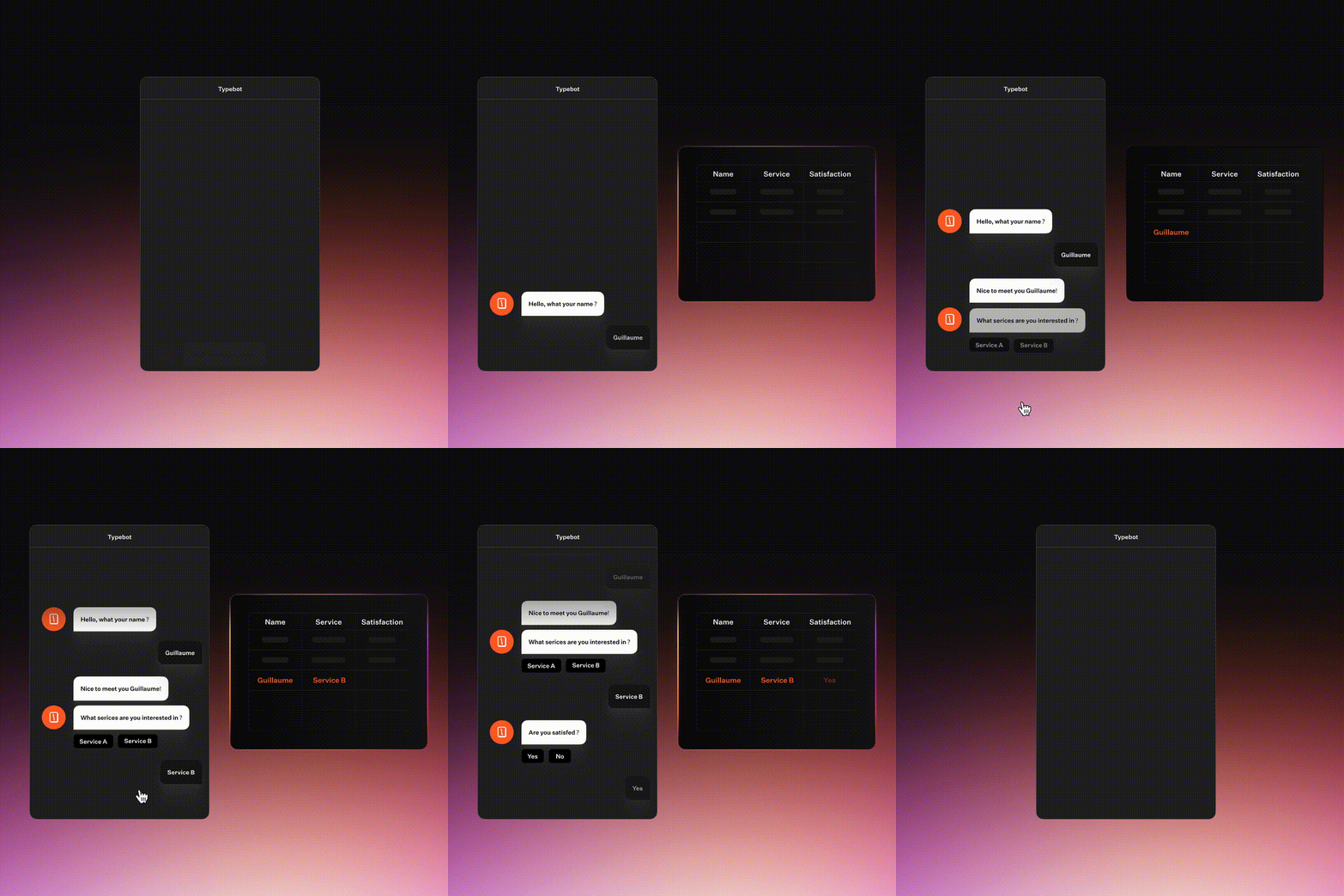
Use tools like Typebot to export chat data to CSV, map Result IDs to orders, compute deflection and conversion lift. Compare automated outcomes with agent costs. These numbers reveal whether the bot meets commercial targets and highlight areas for further optimization.
Quantifying cost savings and efficiency gains builds a strong business case for chatbot implementation. These metrics also guide where to focus improvements.
Wrapping It Up
Retail chatbots have moved from novelty to necessity. The data is clear. Brands using conversational AI see measurable improvements in sales, cost efficiency, and customer satisfaction.
Start with one high-impact use case. FAQ automation, product recommendations, or cart recover. Then, expand based on results. Tools like Typebot make implementation accessible without heavy engineering resources.
Your customers are already comfortable talking to bots. The question is whether you'll meet them in conversation.
Create, customize, and deploy your first Typebot today. No coding required.
No trial. Generous free plan.